FAQ
When is the land sale closing?
The target closing is in the 3rd quarter of 2026.
What is the land purchase price?
The purchase price is over $12 million dollars for the land.
When will construction start?
The target construction start is the end of the 2nd quarter of 2027.
When will construction be completed?
The project will be built in phases with full build out in about 5 years.
What about water usage?
A huge water consumption is one of the biggest myths about data centers.
- The Perry Technology Park facility will be air cooled, not water cooled.
- The “closed loop” system does not create large water consumption.
- Perry Technology Park will not use well water.
- There will not be an impact on residential water pressure.
- Usage will be commensurate with a light industrial project and use approximately 275,000 gallons per day (gpd) which has already been allocated to the site.
- An existing 24’’ water main is currently located in Route 20 with other supply lines nearby in Center Road and Main Street.
- There is plenty of water available for other future projects. The Bacon Road facility serving Perry Village currently has a design capacity of ±9 million gallons per day, but only produces about ±3 million gallons per day.
- The Aquarius Water Treatment Facility has a design capacity of ±20 million gallons per day.
Modern data centers like ours are designed with highly efficient cooling systems that dramatically reduce—or in many cases eliminate—water consumption compared to older facilities. Many new projects like this one (including those using closed-loop liquid cooling, direct-to-chip cooling, or air-based/free cooling) use zero evaporative water.
Data center companies prioritize efficient water practices in operations and development and site selection is an important aspect of that best use practice. The climate of northern Ohio helps the data center cooling to be efficient as opposed to a location such as Phoenix, AZ. Steel mills, golf courses, pulp and paper mills, mining, some food and meat production and other types of manufacturing processes use more water than data centers.
Of course, the project will be required to comply with all Ohio EPA permits as well.
How will the data center integrate into the Village?
There are strict design requirements that were implemented to avoid negative impacts to the community and nearby residents including:
- Strategic building placement requirements
- Increased setbacks from property lines
- Landscape buffer requirements which include earthen berms, fences / walls, and landscaping for visual and sound attenuation
- Equipment setbacks including concealed mechanical equipment requiring louvers and enclosures
- Appropriate architecture with height limits and building design standards
- The maximum height limit is 65 feet which is well below the height of the existing transmission towers and other local landmarks
- Site Plan Approval is required along with Landscape Plan and Photometric Plan requirements
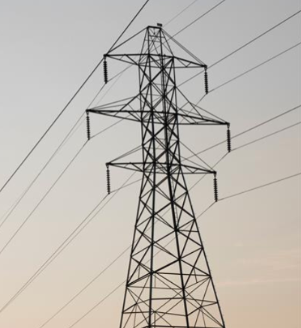
Local landmarks include the Perry Nuclear cooling towers (515’ tall), clock tower (126’ tall), the electric transmission towers (120’ tall) and the theater (118’ tall).
I’m concerned about noise. Will I hear it?
We have taken noise mitigation very seriously. This is a modern data center designed to operate quietly and below levels that would disturb residents.
There are stringent noise standards that have been put into place to protect residents. The Village did not have rigid noise or vibration standards previously, but does now along with testing procedures and protocols to ensure compliance.
Property line sound levels may not exceed 65 dBA. See the chart below for typical sound levels:
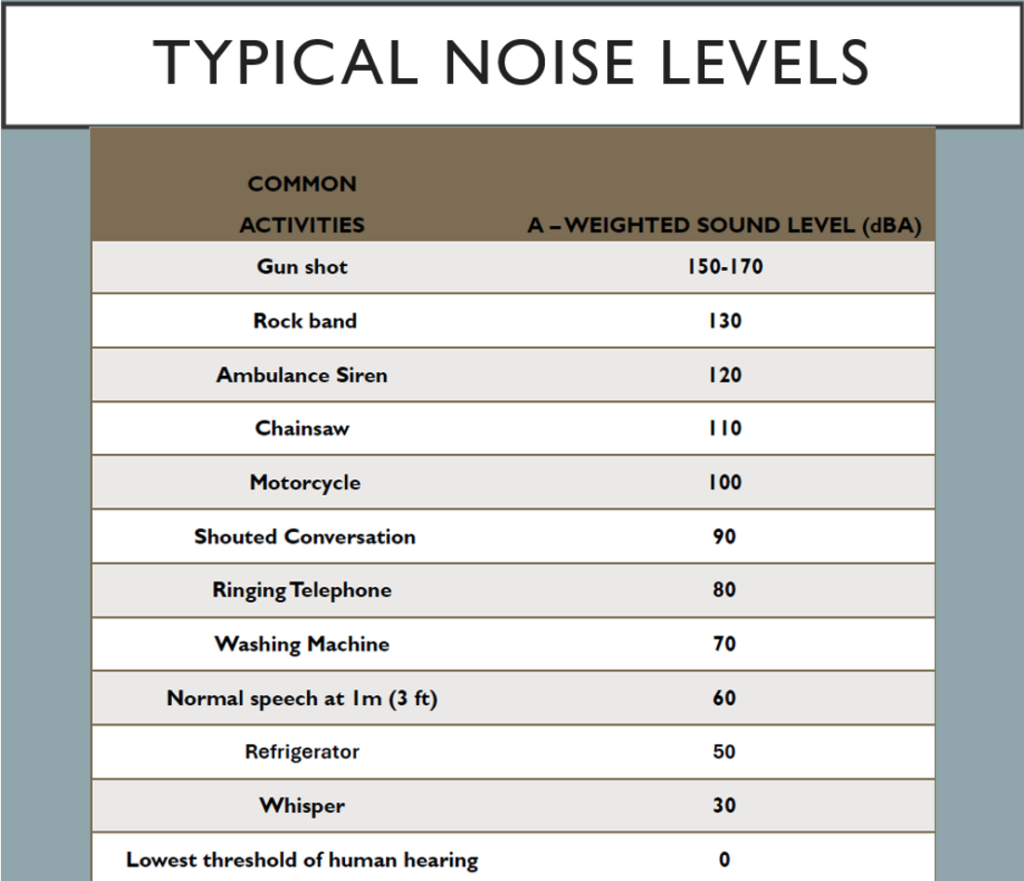
Many other industrial uses would be louder such as manufacturing machinery, manufacturing processes, distribution facilities with significant truck traffic and noise, “beeping” forklifts, etc.
Air handlers will have louvers and screening and sound attenuation and use the latest low-noise technology.
The equipment is housed in sound attenuated buildings.
Smart building layout will help attenuate sound and the the property boundaries have landscape buffers, earthen berms, large setbacks and screening to help attenuate noise.
The project will meet and exceed all local noise ordinances and conduct pre- and post-construction monitoring. Many Ohio communities with existing data centers report no ongoing noise issues once the data centers are operational.
Will the lighting disturb the community?
No – there are new “dark sky” standards that have been implemented to ensure lighting will not disturb the community. There is also a new requirement for a photometric study and plan to be submitted prior to construction to ensure compliance.
Lighting placement and fixtures are designed in a thoughtful way, taking into consideration human safety, visual comfort and building aesthetics and identification, while being respectful of the surroundings.
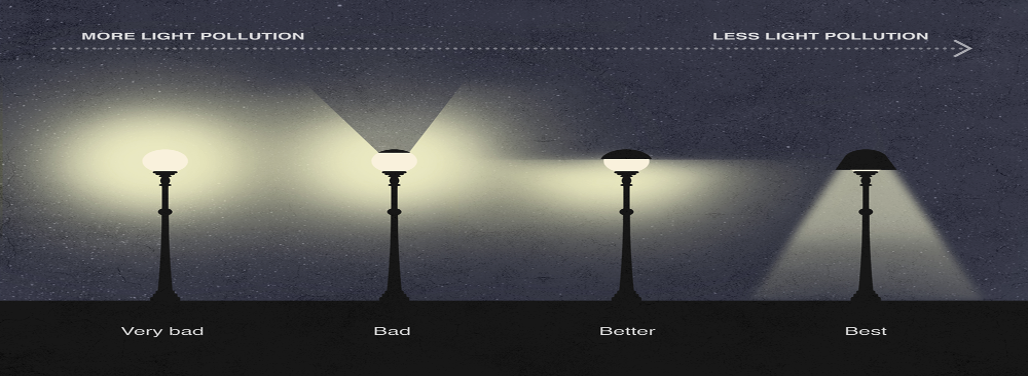
The development standards call for “dark sky” measures to minimize light pollution:
- A photometric study is required
- Shielded fixtures are required
- No flood lighting allowed
- Downcast lighting is required
- No uplighting of the buildings is allowed
- Reduced pole mounted fixture heights
- Maximum height of 20’ on building mounted fixtures
Will the data center cause my electric rates to go up?
No—Ohio regulations now require large data centers to pay their fair share and protect residential and small-business customers.
The Perry Technology Park project is paying its own costs for power. It will build and pay for its own substation. It will post large letters of credit with First Energy to ensure that costs do not fall to any other rate payor classes, including residential customers. Additionally, the data center falls into a separate tariff from residential customers and the data center tariff now protects other customers from costs associated with data centers.
Under the Public Utilities Commission of Ohio (PUCO) Data Center Tariff (approved 2025 and now in effect for major utilities like AEP Ohio and implemented by First Energy), projects like ours must commit to contracts with First Energy to cover the costs of service to the project even if actual energy usage is lower. This prevents overbuilding infrastructure that residents would otherwise subsidize.
We will pay directly for the power we use and for the dedicated infrastructure upgrades needed to serve our facility.
This project will follow the new rules designed to prevent cost shifting to Ohio families. Your rates are protected by these safeguards.
Charles River Associates recently found that data center build outs did not trigger increases in retail utility rates over the past decade.
https://media.crai.com/wp-content/uploads/2026/02/02092628/Retail-rate-trends-in-the-US.pdf
Will The Perry Technology Park data center destabilize the electric grid or cause black-outs?
No. Electric utilities connect major new developments, such as the Perry Technology Park, to the power grid only after confirming that they can reliably serve all connected customers, even under extreme demand conditions. In some cases, utilities delay data center connections precisely to protect grid reliability. Utilities exist to maintain system reliability and prevent outages. Their greatest challenge comes from sudden, unpredictable changes in electricity supply or demand. Data centers, by contrast, draw power in a highly stable and predictable manner. This consistency makes data centers strong utility customers and allows grid operators to plan generation and transmission more effectively than they can for weather-driven residential or commercial demand. Data center development also strengthens local power infrastructure. As part of their development process, we will fund costs to upgrade transmission lines and install substations. These investments improve grid resilience and reduce the likelihood of localized power disruptions. In addition, data centers maintain onsite backup power systems that allow them to disconnect from the grid when it experiences stress, typically during periods of limited generation. This capability reduces strain on the grid during emergencies.
First Energy, the grid operator (PJM), the Department of Energy and the Federal Energy Regulatory Commission (FERC) all stress grid reliability and actively address reliability through planning, interconnection modeling, technology and infrastructure upgrades to ensure that existing service is not compromised. The large steady loads of data centers help contribute to the fixed costs of the grid, pay for improvements and pay their own way in the state of Ohio. Data centers are not a part of the problem, they are actually a part of the solution.
This project will include a First Energy circuit breaker system which isolates the project from the grid and vice versa.
How will the site be accessed?
The site will be accessed from US-20. An emergency access only location will be on Main Street.
Will the property be secure?
Yes – the site will be fenced with a gated entry with 24 hour security operations.
What does the project do for me?
The Perry Technology Park will help keep your residential tax rates low. It will do this by generating huge revenues to the local tax base.
As you know from the proposed Fire District levy, new revenue sources are needed and this Perry Technology Park will help contribute meaningfully to the revenue needs in the community.
The project will provide enormous economic benefits to the community, including significant long-term tax revenues for the Village, the Township, Perry Local Schools, the Fire District, parks and recreation and the senior center. Additionally, at the land closing, the project will fund $2.7 million dollars in near-term community needs and enhancements.
Please refer to the Community Benefits tab of this website for more detail on these immediate, up-front and on-going benefits. Included in these up-front and on-going payments is payment to the Village that will allow the Village to provide for free trash service (standard container, once per week) for all residential customers in the Village for 15 years.
Other benefits will include payments to the Perry Fire District, Village for Lydic Park improvements, Perry Township and school district needs. These will help fill budget gaps and immediate revenue needs in the community.
How will the project benefit the community?
The project will deliver immediate community benefits though: 1) the $12 million dollar land purchase; 2) PILOT payments at the land closing and 3) long-term benefits over the life of the project. Please see the details in the CRA and Community Benefits section of the website.
The project will provide for stronger local finances without community residents carrying the load. It will help reduce future levies on residents and keep residential tax rates low.
How will the project benefit our local schools?
The Perry Local schools will be the largest beneficiary of the project. The project is projected to provide in excess of $155 million dollars in property tax revenues over the first 31 years. This will be a new source of revenues for the school district which currently receives $0 from the property. Again, the property currently generates no property tax payments.
In general what are the economic benefits of data centers?
The data center industry provides significant economic benefits for local communities, states, and the U.S. as a whole. In 2023, the U.S. data center industry directly employed more than 600,000 workers and supported 4.7 million jobs in total. The industry also provides meaningful tax contributions to local, state, and federal governments that help finance important essential services such as education, infrastructure maintenance (like roads and public transportation), public safety, and health services. In total, the data center industry’s tax contribution to local, state, and federal governments was $162.7 billion in 2023—a 146% increase from 2017.
The Ohio Chamber of Commerce Research Foundation published a study titled The Economic Impact of Data Centers in Ohio https://ohiochamberfoundation.com/projects/the-economic-impact-study-of-data-centers-in-ohio/ which showed:
- Massive job creation: in 2024 data centers supported 95,217 total jobs (direct, indirect and induced) across Ohio
- A powerful employment multiplier: Every direct operations or on-site construction job supports 1.6 additional jobs statewide which ripples benefits through supply chains and local communities
- The industry contributed $11.8 billion to Ohio’s GDP in 2024
- High wage labor income: The sector delivered $6.99 billion in labor income in 2024 driven by high paying technical and skilled roles plus strong multiplier effects
- Significant tax revenues: from 2017 to 2024, data centers generated $5.21 billion in state and local tax revenues while receiving $2.5 billion in incentives, creating a $2.71 billion net fiscal surplus and a strong 2.1:1 return on every incentive dollar
Across Ohio, data centers have already contributed billions in cumulative tax revenue and support tens of thousands of jobs through construction, operations, and supply chains.
Do data centers benefit other businesses?
Data centers enable new innovations and efficiencies across our 21st-century economy. In addition, data centers are vital economic engines for local communities. Data centers create employment opportunities and are catalysts for broader economic growth, supporting ecosystems of suppliers, service providers, and construction activities.
The exponential growth of the data center industry has contributed to the expansion of companies throughout its supply chain. From construction and fabricators of steel used in data center projects, to HVAC manufacturing and materials testing companies, the data center industry fuels economic growth in countless companies across a variety of industries. Many of the construction jobs are supplied by local skilled labor from local firms. The data center industry has also leaned in, working with manufacturers on shoring up supply chains and helping accelerate project construction timelines.
The following are key types of companies that will be involved in the construction of the Perry Technology Park and its operations and the supply chain:
- Architectural and civil engineering firms, which design facilities, prepare sites, and manage structural construction
- Materials suppliers, which produce lumber, concrete, steel, insulation, and other building materials
- Environmental and geotechnical specialists, which conduct site selection and feasibility analysis
- Electrical and mechanical contractors, which install power systems, backup generators, uninterruptible power supply (UPS) systems, HVAC equipment, and fire suppression systems
- Networking and IT infrastructure providers, which supply racks, servers, switches, cabling, storage systems, and network components
- Power equipment and UPS manufacturers, which produce batteries, generators, power distribution units, and electrical switchgear
- HVAC and environmental control companies, which design and manufacture cooling, airflow, and climate management systems
- Security and surveillance firms, which provide physical security systems, cameras, fences, biometric readers, and alarms
- Software and data center management vendors, which deliver infrastructure management software, monitoring platforms, and automation tools
- Telecommunications and connectivity providers, which deliver high-speed fiber, redundant network connections, and peering services
How many jobs do data centers really create?
The exact number of jobs in a data center can vary depending on the company, business model (hyperscale, multitenant, edge, etc.), size of the facility, and other factors, but generally it can range from dozens to hundreds of direct jobs. Plus, a report from PwC finds that each job in the data center industry supports six jobs elsewhere in the economy. In total, the industry supported 4.7 million jobs in the U.S. in 2023.
The Perry Technology Park campus will have approximately 200 permanent employees. The salaries will average approximately $80,000 per year.
Do data centers support any other types of jobs?
In addition to the well-paying and stable jobs in data center operations, the industry creates many long-term labor and construction jobs. The Perry Tech Park data center project can take up to five years to construct and employs hundreds of workers. Many of these construction jobs will be filled by local union and trade personnel.
A typical data center project employs large crews of sheet metal workers, pipefitters, electricians, HVAC technicians, and other trades for 12 to 18 months per building as crews construct facilities and install systems. Because this project will include multiple buildings developed in phases or built in parallel, this project will sustain demand for construction labor over longer periods. Crews can move from one building to the next on the same site, creating more continuous employment than many traditional construction projects. This sustained pipeline allows construction workers to live closer to their jobs and spend more time with their families and in their local communities, rather than commuting long distances.
Beyond the construction phase, there are dozens of ongoing jobs in each data center to support operations and maintenance, including electricians, pipefitters, heating and cooling, testing consultants and more. For example, IBEW Local 26, the Northern Virginia electrician union, notes that they “have over 30 workers in every single completed data center building doing maintenance work.”
Are data center jobs good jobs?
The data center industry offers high-wage, high-skill jobs that often don’t require a four-year degree. Labor income earned directly from the data center industry grew by 144 percent between 2017 and 2023. The sector delivered $6.99 billion in labor income in 2024, more than doubling from $3.0 billion in 2017. This figure includes direct wages and benefits of $3.3 billion. These wages circulate through local economies benefitting local communities such as the Village of Perry.
Importantly, skills gained in data center operations transfer to other high tech industries and offer pay above the local prevailing wages.
The Perry Technology Park will provide jobs with salaries and benefits well in excess of the average prevailing wages in the area.
Why is there high demand for data centers?
There has been a significant increase in demand for data centers, because people consistently rely on them in their day-to-day activities. With an average of 21 connected devices per household in the U.S. and 5.5 billion people currently online globally, the role of data centers is expected to grow, as consumers and businesses generate twice as much data in the next five years as they did in the past decade.
All of the activities below rely on secure, connected data centers operating continuously:
- Streaming music, shows (Netflix, HBO, Apple TV, etc) and podcasts
- Mobile and on-line banking and payments
- Payroll processing and benefits payments
- Remote work and on-line meetings (MS Teams, Zoom, Google Meet)
- Shared documents and collaboration
- Emergency and 911 services
- Weather outlook delivery and emergency alerts
- On-line classes for students
- Telehealth meetings, reminders and notifications
- On-line food ordering and delivery services
- On-line shopping and household delivery services
- Home monitoring for security and smart cameras
- File back-up and photo storage
- Connects baby monitors, smart thermostats and other devices
Billions of people use the internet and data centers daily across the globe.
Are data centers loud?
Data center sound, is regulated by local government ordinances that require facilities to minimize operational noise beyond the property lines. A report from Virginia’s Joint Legislative Audit & Review Commission (JLARC) found that “data centers emit low-frequency noise that is not loud enough to damage nearby residents’ hearing and rarely loud enough to violate noise ordinances.” Furthermore, the data center industry often proactively adopts voluntary noise limits based on established guidance (like Environmental Protection Agency (EPA) or ANSI/ASA S1.1-2013) and invests considerable effort in noise studies, mitigation design, site design and cooperatively addressing community concerns.
The Village has stringent noise and vibration standards governing noise to ensure residents are protected.
Why do data centers use so much energy?
There is unprecedented demand for the digital services that have become central to our daily lives and the modern economy. These digital, cloud-based services on which we all rely take place in physical locations—America’s data centers. With an average of 21 connected devices per household in the U.S. and 5.5 billion people currently online globally, the role of data centers is expected to grow, as consumers and businesses generate twice as much data in the next five years as they did in the past decade. This growth is driven by the widespread adoption of cloud services, the proliferation of connected devices, and the rapid scaling of advanced technologies like generative AI which has been tried by over 50% of US households.
Data centers are like the brains of the internet. They process, store, and communicate all the data behind the digital services we rely on every day—everything from online shopping and streaming movies to financial transactions, government services and telehealth appointments. The unprecedented increase in demand for these digital services is driving growth in the data center industry and the next for more buildings.
To perform these functions, data centers are equipped with servers and other devices that require a significant amount of energy to operate. These devices generate heat while in operation, and power also is required to remove heat and maintain operating temperatures in data centers.
How do data centers unlock greater efficiency for our modern society?
Data centers aggregate our collective computing demands efficiently and securely. Previously, these types of computing resources were dispersed across businesses, which was far less efficient and secure. In 2010, nearly 80 percent of data center computing was conducted in smaller traditional computer centers. By 2018, approximately 89 percent of data center computing took place in larger cloud data centers. By centralizing computing resources, data centers leverage innovations in design, equipment, and technology to maximize energy efficiency. While electricity consumption at data centers rose 6 percent from 2010 to 2018, computing output jumped 550 percent, marking significant gains in efficiency and productivity.
It is important to recognize data centers are not simply large consumers of electricity; they also facilitate efficiency gains for homes, businesses, industrial consumers, and utilities across the economy. Many technologies and strategies deployed across the country—including smart thermostats, smart meters, managed electric vehicle charging, smart lighting, and grid enhancement technologies—require the digital infrastructure provided by data centers. The U.S. Department of Energy recently released a report identifying the ways in which AI applications supported by data centers will increasingly and significantly enhance the way in which our electricity grid is operated, particularly by enabling better grid planning and forecasting, streamlining siting and permitting processes, and improving grid reliability and system reliance.
Will the data center harm the environment or local water quality?
No. We are committed to sustainable operations and full regulatory compliance.
Cooling systems are designed to minimize wastewater. Where discharge occurs, it is treated to meet Ohio EPA standards.
Discharge is not injected into the ground or aquifer.
Used equipment is properly recycled, never buried on-site or disposed of improperly.
The facility will not contribute to PFAS or other contaminants of concern.
The data center will be regulated by the Ohio EPA and meet strict air quality standards as well.
Do data centers cause air pollution?
Unlike industrial and manufacturing facilities, data centers have no process or operational emissions from their core functions. The servers, cooling systems and IT equipment do not burn fuel or release criteria pollutants. This is fundamentally different from industrial facilities with continuous smokestack or process emission.
The Ohio EPA (Environmental Protection Agency) provides rigorous, site-specific oversight through its air permitting program under the Clean Air Act and Ohio Administrative Code. Ohio EPA conducts modeling for pollutants like NOx and only issues permits when the facility demonstrates compliance with National Ambient Air Quality Standards (NAAQS).
The Ohio EPA’s strict permitting, monitoring, and enforcement protects residents and ensures that a data center will not “cause air pollution” in any meaningful, ongoing or unregulated way.
Are data centers given special tax breaks that hurt taxpayers?
Like many large capital investments in Ohio, qualifying data centers may receive targeted incentives (e.g., sales-tax exemptions on equipment) designed to attract high-tech infrastructure. However:
- These incentives are performance-based and require long-term commitments (jobs, investment, operations).
- The industry still delivers extraordinary net positive fiscal returns through property taxes, payroll taxes, and economic multipliers.
- Ohio’s incentives have helped make the state a leader in data centers (“Silicon Heartland”), bringing private capital investment in the tens of billions and great jobs to the state.
- Abatements do not hurt taxpayers. Clearly, Ohio would not allow them if they did not provide a benefit or if they hurt taxpayers. The idea that residents pay more taxes because of an economic development project is wrong and not supported by facts.
Why is this data center being built in our community?
Ohio offers reliable power infrastructure, a skilled workforce, and business-friendly policies—making it ideal for critical digital infrastructure that powers everything from cloud services and AI to everyday internet use, healthcare records, family photos, online education, financial systems, emergency services and remote work. Our Pery Technology Park will bring good jobs, tax revenue, and long-term economic growth while operating under some of the strictest new safeguards in the country for water and electricity costs.
How are data center developments regulated?
Data Center projects are highly regulated at the local, state, and federal level through regulatory agencies:
Federal Level:
- At the federal level, data centers and their associated infrastructure—including cooling systems, electrical substations, backup generators, IT equipment, and support facilities—are subject to multiple regulatory frameworks designed to protect public health, environmental quality, worker safety, and grid reliability. The U.S. Environmental Protection Agency (EPA) regulates air emissions from backup generators and other equipment, stormwater discharges, wastewater management, and the storage and handling of hazardous materials such as batteries, industrial coolants, and cleaning chemicals. EPA permits and inspections ensure compliance with the Clean Air Act, Clean Water Act, and Resource Conservation and Recovery Act (RCRA). Occupational and workplace safety is enforced by Occupational Safety and Health Administration (OSHA) standards, covering construction, maintenance, and operational activities. Fire protection and electrical safety are guided by federal codes such as the National Fire Protection Association (NFPA) standards, which complement local and state building codes. Electrical interconnections to the transmission grid are regulated by the Federal Energy Regulatory Commission (FERC) to maintain safe, reliable, and code-compliant power delivery. In addition, federal EMF guidelines—referenced by agencies like the EPA and FCC—provide benchmarks for safe exposure levels. Together, these regulations, inspections, and reporting requirements ensure that data centers operate safely, minimize environmental and public health impacts, and maintain compliance across all aspects of facility design, construction, and ongoing operation.
State Level:
- Data centers in Ohio, along with their ancillary infrastructure such as cooling systems, substations, generators, and electrical distribution equipment, are also subject to a comprehensive set of state regulations designed to protect public health, environmental quality, and worker safety. Ohio EPA oversees environmental compliance, including air emissions from backup generators, stormwater and wastewater management, and the proper storage, handling, and disposal of hazardous materials such as industrial coolants, batteries, and chemicals used in facility operations. The Ohio Department of Natural Resources (ODNR) will also be involved in permitting and environmental review of the site. Energy and electrical interconnections are regulated by the Public Utilities Commission of Ohio (PUCO), and the grid operator, PJM, which ensures safe, reliable, and code-compliant connections to the state’s transmission and distribution systems. Construction and facility operations must comply with the Ohio Building Code and state fire codes, which govern structural integrity, electrical systems, fire suppression, and emergency planning. Collectively, these agencies provide oversight through permitting, inspections, reporting, and enforcement mechanisms, ensuring that data centers operate safely, efficiently, and in compliance with environmental, health, and safety standards across all aspects of facility design, construction, and ongoing operation.
Local level:
- In the Village of Perry, a comprehensive set of requirements governing all aspects of site development and operations, including lot and yard dimensions, building separation, maximum height, lighting, noise, screening and buffering, etc. In addition to these standards, the Village requires site plan approval and landscape plan review prior to the issuance of any building permits. Together, these provisions ensure that data centers are designed and operated in a manner consistent with community safety, aesthetics, and local land-use standards.
What are the alternatives to a data center project?
The former Champion Farm property is not viable as a nursery and the operator was foreclosed on by their bank. The property was listed with a national real estate brokerage firm, Cushman Wakefield, for many years with no real offers. Office projects, retail projects, industrial facilities, medical offices and other types of development do not work at this location because of a lack of rooftops and insufficient demand.
The School District limited residential development to 50 homes on the site which is means that the land has little residential value and cannot support the land improvements (grading, roads, water and sewer infrastructure) required to service them. A residential project does not generate the economic returns and property tax revenues for the community that a data center project does – it is not even close!
Industrial is not viable at this location, but even if it were, it would have far more negative impacts than the Perry Technology Park.
An industrial project would have:
- Far more truck trips
- More traffic
- More noise
- “Beeping” forklifts
- More diesel emissions
Less Economic Benefit to the Village:
- Lower quality jobs
- Fewer employees than robots
- Much lower project valuation and property taxes
- Lower revenues to local jurisdiction
What measures are in place to ensure Long-Term Community Protection?
Federal environmental law explicitly authorizes Environmental Protective Agency to conduct compliance inspections, evaluations, and investigations at regulated facilities as part of its core enforcement role. Under U.S. EPA’s compliance monitoring program, inspectors may enter and inspect facilities to determine whether they are operating in compliance with applicable laws, permits, and standards. EPA’s compliance monitoring framework includes on-site compliance inspections for all covered environmental programs (air, water, hazardous waste, etc.) — which are used to gather information on actual operation and compliance status. EPA can inspect a facility, interview staff, review records, collect samples, and observe operations as part of these inspections.
The Ohio EPA has similar oversight, inspections and review authority.
Federal and state utility regulators maintain ongoing oversight over electrical infrastructure connected to the Perry Technology Park data center. The Federal Energy Regulatory Commission (FERC) enforces reliability standards approved for the bulk power system, including periodic audits and reporting requirements under mandatory reliability programs. The Public Utilities Commission of Ohio (PUCO) requires regulated utilities to maintain, inspect, and report on the safety and reliability of transmission and distribution systems under Ohio Administrative Code standards. These long-term monitoring and reporting frameworks ensure continued compliance with reliability and safety requirements over the life of the facility and its associated electrical infrastructure.
Why are data centers referred to as “critical infrastructure?”
The U.S. government categorizes data centers as “critical infrastructure” because they are vital to national security, economic stability, and public health. Operating continuously, data centers improve electric grid reliability, advance healthcare outcomes, expand educational opportunities, secure financial transactions, and support countless everyday tasks most people take for granted.
How are data centers related to the healthcare system?
Healthcare services increasingly rely on data center capabilities. Data centers support emergency 911 services, electronic health records, physician scheduling, and patient portals. They also enable clinicians to remotely monitor cardiac patients at home, identify irregular heart patterns, and prevent strokes while reducing hospitalizations and deaths associated with heart failure. In addition, data centers power artificial intelligence tools that assist clinicians in analyzing mammograms, MRIs, CT scans, electrocardiograms, and biopsy results. By processing large volumes of medical data quickly and securely, these systems improve diagnostic accuracy and patient outcomes.