
Myth vs Reality
Myth: The data center will consume a huge amount of our water.
Reality: Modern data centers, including the Perry Technology Park, are designed with highly efficient cooling systems that significantly reduce—and in many cases eliminate—water consumption compared to older facilities. Technologies such as closed-loop liquid cooling, direct-to-chip cooling, and air-based (free) cooling allow new data centers to operate with minimal or no evaporative water use.
For the proposed Perry Technology Park:
- The facility will be air-cooled, not water-cooled, which substantially reduces water demand.
- The cooling system will operate in a closed-loop configuration, meaning coolant is recirculated and does not require continuous withdrawal.
- The project will not use well water.
- Total water use is expected to be consistent with a light industrial facility or typical office building and remain below the 275,000 gallons per day (GPD) already allocated to the site by the County.
From a system capacity standpoint:
- Existing infrastructure includes a 24-inch water main along Route 20, with additional supply lines in Center Road and Main Street.
- The Bacon Road water treatment facility, which serves Perry Village, has a design capacity of approximately 6 million gallons per day (MGD) but currently operates at about 3 MGD, leaving substantial unused capacity.
- The Aquarius Water Treatment Facility has a design capacity of approximately 20 MGD, further indicating ample regional water supply.
- As a result, the project’s projected water demand represents a small fraction of available system capacity and will not prevent future development in the area.
Data center operators prioritize water efficiency as part of both operational best practices and site selection. Northern Ohio’s climate is particularly advantageous, as cooler ambient temperatures enable more efficient air-based cooling compared to hotter regions such as Phoenix or Las Vegas where temperatures are much higher.
For context, many traditional industries—including steel manufacturing, pulp and paper production, mining, certain food processing operations, and even golf course irrigation—typically consume substantially more water than modern data centers.
The project will also be required to comply with all applicable regulations, including those set by the United States Environmental Protection Agency, the Ohio Environmental Protection Agency, and local permitting authorities.
Myth: Data centers are too loud.
Reality: We have taken noise mitigation very seriously. This is a modern data center designed to operate quietly and below levels that would disturb the community.
The Village has adopted new, enforceable noise standards, along with testing procedures and compliance protocols to ensure these limits are met. The project will be required to demonstrate compliance through sound modeling and, if necessary, post-construction testing.
Property line sound levels may not exceed 65 dBA. See the chart below for typical sound levels:
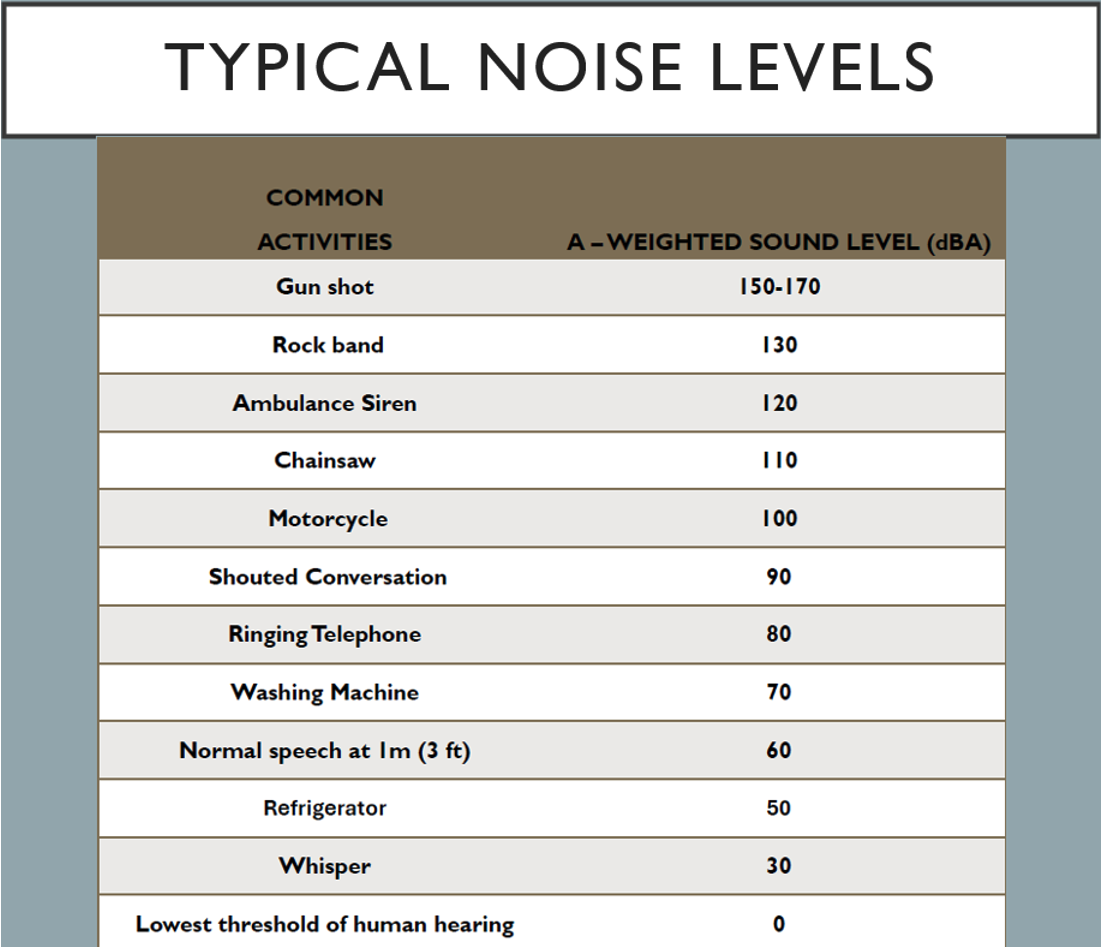
Overall, the facility is expected to operate at sound levels comparable to—or quieter than—typical light industrial uses, and below thresholds that would disturb the surrounding community. Many other industrial uses would be louder such as manufacturing machinery, manufacturing processes, distribution facilities with significant truck traffic and noise, “beeping” forklifts, etc.
Air handlers will have louvers, screening, sound attenuation and use the latest low-noise technology.
Smart building layout will help attenuate sound and the property boundaries have landscape buffers, earthen berms, large setbacks and screening to help attenuate noise.
The project will meet or exceed all local noise mitigation ordinances and conduct pre- and post-construction monitoring. Many Ohio communities with existing data centers report no ongoing noise issues once the data centers are operational.
Myth: The lights will disturb the community.
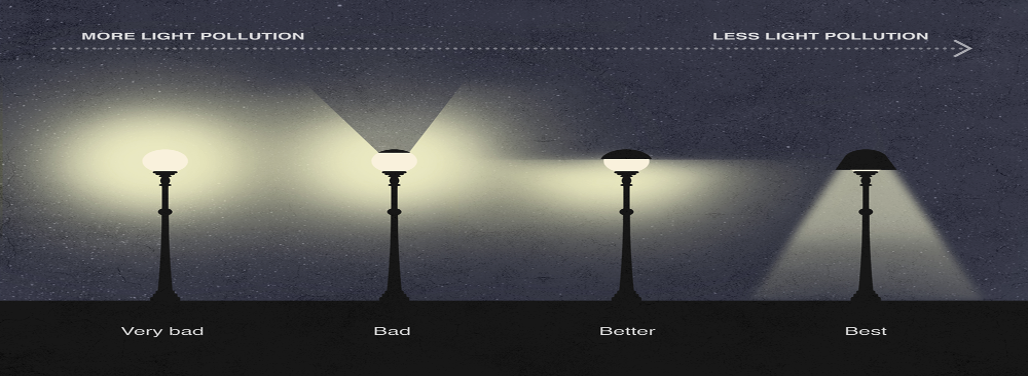
Reality: There are new “dark sky” standards that have been implemented to ensure lighting will not disturb the community. There is also a new Village requirement for a photometric study and plan to be submitted prior to construction to ensure compliance.
Lighting placement and fixtures are designed in a thoughtful way, taking into consideration human safety, visual comfort and building aesthetics and identification, while being respectful of the surroundings.
The development standards requiring “dark sky” measures to minimize light pollution include:
- A photometric study is required
- Shielded fixtures are required
- No flood lighting allowed
- Downcast lighting is required
- No uplighting of the buildings is allowed
- Reduced pole mounted fixture heights required
- Maximum height of 20’ for building mounted fixtures
Myth: The data center will cause my electric rates to go up.
Reality: No, the Perry Technology Park project is structured so that all power-related costs are borne by the operator—not by residential customers.
- The project will build and fully fund its own electrical substation, rather than relying on existing community infrastructure.
- It will provide substantial letters of credit to FirstEnergy, ensuring that the utility is financially protected and that costs are not shifted to other ratepayers.
- Data centers are served under a separate electric tariff class, distinct from residential customers, with contractual protections in place to prevent cost allocation to households or other customer groups.
In addition, utility regulators and providers have updated policies recently specifically to address large-load users like data centers. These frameworks are designed to ensure that new, high-demand facilities pay their own way, including the infrastructure required to serve them.
Ohio regulations now require large data centers to pay their fair share and protect residential and small-business customers. The project’s power infrastructure and agreements are structured so that residential customers are not responsible for funding any portion of the data center’s electrical needs.
Additionally, the data center falls into a separate tariff from residential customers and the data center tariff and utility provider contracts now protect other customers from costs associated with data centers.
Under the Public Utilities Commission of Ohio (PUCO) Data Center Tariff (approved 2025 and now in effect for major utilities like AEP Ohio and implemented by First Energy), projects like ours must commit to contracts with First Energy to cover the costs of service to the project even if actual energy usage is lower. This prevents overbuilding of infrastructure that residents would otherwise subsidize.
Myth: The Perry Technology Park data center will destabilize the electric grid.
Reality: This is false. First Energy has announced “Energize 365,” a $26 billion dollar plan to invest across their distribution and transmission networks for a more secure, reliable grid.
The data center will be connected to the transmission network, not the local distribution network serving the residences of Perry. Further, circuit breakers isolate and protect the grid from the data center and vice versa.
Myth: The data center will cause blackouts.
Reality: This is another common myth about data centers. The electric utilities connect major new developments, such as the Perry Technology Park, to the power grid only after confirming that they can reliably serve all connected customers, even under extreme demand conditions. In some cases, utilities delay data center or other connections precisely to protect grid reliability. Utilities exist to maintain system reliability and prevent outages. Their greatest challenge comes from sudden, unpredictable changes in electricity supply or demand. Data centers, by contrast, draw power in a highly stable and predictable manner. This consistency makes data centers strong utility customers and allows grid operators to plan generation and transmission more effectively than they can for weather-driven residential or commercial demand. Data center development also strengthens local power infrastructure. As part of the development process, we will fund costs for transmission system reinforcement. These investments improve grid resilience and reduce the likelihood of localized power disruptions. In addition, data centers maintain onsite backup power systems that allow them to disconnect from the grid when it experiences stress, typically during periods of limited generation. This capability reduces strain on the grid during emergencies which is a benefit.
First Energy’s System Average Interruption Duration Index (SAIDI) for 2024 which is a key measure of electric reliability and represents the approximate amount of time a customer was without power over the course of that year was 249.93 minutes which means power was available about 99.9% of the time. This demonstrates that blackouts are rare and are most often storm related.
First Energy, the grid operator (PJM), the Department of Energy and the Federal Energy Regulatory Commission (FERC) all stress grid reliability and actively address reliability through planning, interconnection modeling, technology and infrastructure upgrades to ensure that existing service is not compromised. The large steady loads of data centers help contribute to the fixed costs of the grid, pay for improvements and pay their own way in the state of Ohio. Data centers are not a part of the problem, they are actually a part of the solution.
This project will also include a robust First Energy circuit breaker system which isolates the project from the grid and vice versa.
Myth: Data center jobs are not good jobs.
Reality: The data center industry offers high-wage, high-skill jobs that often don’t require a four-year degree. Labor income earned directly from the data center industry grew by 144 percent between 2017 and 2023. The sector delivered $6.99 billion in labor income in 2024, more than doubling from $3.0 billion in 2017. This figure includes direct wages and benefits of $3.3 billion. These wages circulate through local economies benefiting local communities such as the Village of Perry.
Importantly, skills gained in data center operations transfer to other high-tech industries and offer pay above the local prevailing wages.
It is likely that residents will be able to work on the data center during construction and at the data center once it is operational.
Myth: The data center will harm the environment and local water quality.
Reality: This is false. We are committed to sustainable operations and full Federal, State and local regulatory compliance.
Cooling systems are designed to minimize water use and wastewater. Wastewater will be discharged into the sewer system the same way as an office, retail, industrial or manufacturing facility.
Stormwater is carefully managed using Best Management Practices (BMPs) and approved under Federal, State and local rules and regulations.
Used equipment is properly recycled, never buried on-site or disposed of improperly.
The facility will not contribute to PFAS or other contaminants of concern.
The data center will be regulated by the Ohio EPA and meet strict air quality standards as well.
Myth: Data centers cause signifiant air pollution.
Reality: Unlike industrial and manufacturing facilities, the Perry Technology Park will have no process or operational emissions from its core functions. The servers, cooling systems and IT equipment do not burn fuel or release criteria pollutants. This is fundamentally different from manufacturing facilities with continuous smokestack or process emission.
The Ohio EPA (Environmental Protection Agency) provides rigorous, site-specific oversight through its air permitting program under the Clean Air Act and Ohio Administrative Code. Ohio EPA conducts modeling for pollutants and only issues permits when the facility demonstrates compliance with National Ambient Air Quality Standards (NAAQS).
The Ohio EPA’s strict permitting, monitoring, and enforcement protects residents and ensures that a data center will not “cause air pollution” in any meaningful, ongoing or unregulated way.
Myth: There are other better alternatives to a data center project at Champion Farm.
Reality: The former Champion Farm property is not viable as a nursery and the prior operator was foreclosed on by their bank. The property was listed with a national real estate brokerage firm, Cushman Wakefield, for many years with no real offers. Office projects, retail projects, industrial facilities, medical offices and other types of development do not work at this location because of a lack of rooftops and insufficient demand.
The School District limited residential development to 50 homes on the site which means that the land has little residential value and cannot support the land infrastructure improvements (grading, roads, water and sewer infrastructure) required to service them. A residential project does not generate nearly the same economic returns and property tax revenues for the community that a data center project does – it is not even close!
Industrial is not viable at this location, but even if it were, it would have far more negative impacts than the Perry Technology Park.
An industrial project would have:
- Far more truck trips
- More traffic
- More noise
- “Beeping” forklifts
- More diesel emissions
Less Economic Benefit to the Village:
- Lower quality jobs
- Fewer employees than robots
- Much lower project valuation and property taxes
- Lower revenues to local jurisdictions
Myth: Data centers do not benefit other businesses.
Reality: This is false. Data centers are vital economic engines for local communities. Data centers create employment opportunities and are catalysts for broader economic growth, supporting ecosystems of suppliers, service providers, and construction activities.
The exponential growth of the data center industry has contributed to the expansion of companies throughout its supply chain. From construction and fabricators of steel used in data center projects, to HVAC manufacturing and materials testing companies, the data center industry fuels economic growth in countless companies across a variety of industries. Many of the construction jobs are supplied by local skilled tradesmen and labor from local firms. The data center industry has also leaned in, working with manufacturers on shoring up supply chains and helping accelerate project construction timelines.
The following are key types of companies that will be involved in the construction of the Perry Technology Park and its operations and the supply chain:
- Architectural and civil engineering firms, which design facilities, prepare sites, and manage structural construction
- Materials suppliers, which produce lumber, concrete, steel, insulation, and other building materials
- Environmental and geotechnical specialists, which conduct site selection and feasibility analysis
- Electrical and mechanical contractors, which install power systems, backup generators, uninterruptible power supply (UPS) systems, HVAC equipment, and fire suppression systems
- Networking and IT infrastructure providers, which supply racks, servers, switches, cabling, storage systems, and network components
- Power equipment and UPS manufacturers, which produce batteries, generators, power distribution units, and electrical switchgear
- HVAC and environmental control companies, which design and manufacture cooling, airflow, and climate management systems
- Security and surveillance firms, which provide physical security systems, cameras, fences, biometric readers, and alarms
- Software and data center management vendors, which deliver infrastructure management software, monitoring platforms, and automation tools
- Telecommunications and connectivity providers, which deliver high-speed fiber, redundant network connections, and peering services
Myth: Data centers are not regulated and contaminate the environment.
Reality: False! Data Center projects, including Perry Technology Park, are highly regulated at the local, state, and federal level through multiple regulatory agencies:
Federal Level:
- At the federal level, data centers and their associated infrastructure—including cooling systems, electrical substations, backup generators, IT equipment, and support facilities—are subject to multiple regulatory frameworks designed to protect public health, environmental quality, worker safety, and grid reliability. The U.S. Environmental Protection Agency (EPA) regulates air emissions from backup generators and other equipment, stormwater discharges, wastewater management, and the storage and handling of hazardous materials such as batteries, industrial coolants, and cleaning chemicals. EPA permits and physical inspections ensure compliance with the Clean Air Act, Clean Water Act, and Resource Conservation and Recovery Act (RCRA).
- Occupational and workplace safety is enforced by Occupational Safety and Health Administration (OSHA) standards, covering construction, maintenance, and operational activities. Fire protection and electrical safety are guided by federal codes such as the National Fire Protection Association (NFPA) standards, which complement local and state building codes. Electrical interconnections to the transmission grid are regulated by the Federal Energy Regulatory Commission (FERC) to maintain safe, reliable, and code-compliant power delivery. In addition, federal EMF guidelines—referenced by agencies like the EPA and FCC—provide benchmarks for safe exposure levels. Together, these regulations, inspections, and reporting requirements ensure that data centers operate safely, minimize environmental and public health impacts, and maintain compliance across all aspects of facility design, construction, and ongoing operation.
State Level:
- Data centers in Ohio, along with their ancillary infrastructure such as cooling systems, substations, generators, and electrical distribution equipment, are also subject to a comprehensive set of state regulations designed to protect public health, environmental quality, and worker safety. Ohio EPA oversees environmental compliance, including air emissions from backup generators, stormwater and wastewater management, and the proper storage, handling, and disposal of hazardous materials such as industrial coolants, batteries, and chemicals used in facility operations. The Ohio Department of Natural Resources (ODNR) will also be involved in permitting and environmental review of the site.
- Energy and electrical interconnections are regulated by the Public Utilities Commission of Ohio (PUCO), and the grid operator, PJM, which ensures safe, reliable, and code-compliant connections to the state’s transmission and distribution systems. Construction and facility operations must comply with the Ohio Building Code and state fire codes, which govern structural integrity, electrical systems, fire suppression, and emergency planning. Collectively, these agencies provide oversight through permitting, inspections, reporting, and enforcement mechanisms, ensuring that data centers operate safely, efficiently, and in compliance with environmental, health, and safety standards across all aspects of facility design, construction, and ongoing operation.
Local level:
- In the Village of Perry, a comprehensive set of requirements governing all aspects of site development and operations, including lot and yard dimensions, noise and vibration standards, building separation, maximum height, lighting, screening and buffering, etc. In addition to these standards, the Village requires site plan approval and landscape plan review prior to the issuance of any building permits. Together, these provisions ensure that data centers are designed and operated in a manner consistent with community safety, aesthetics, and local land-use standards.
There are multiple agencies with oversight of the data center through the approval, construction and operational phases of the project. The Perry Technology Park is heavily regulated.
Myth: Tax abatements are a “give-away” to the developer, and residents will have to make up the difference by paying higher taxes.
Reality: False!
This is a common misunderstanding of how property taxes and abatements work in Ohio. A tax abatement does not take existing tax money away from the community. Instead, it applies only to new value created by a project—value that does not exist today.
Key Facts
1. There is NO automatic tax increase on residents
- Property tax rates (millage) are not increased because of an abatement.
- Tax rates are based on voter-approved levies and local government budgets, not individual developments.
- There is no requirement for residents to “make up” any difference.
Fact: Tax abatements do not raise surrounding property taxes.
Source: Ohio Department of Taxation, Property Tax – Real Property Overview
2. Abatements apply ONLY to new value
Under Ohio’s Community Reinvestment Area (CRA) program:
- The abatement is a temporary reduction on new building value only.
- The land continues to be fully taxed.
- Existing property values and taxes are not affected.
Fact: No existing tax revenue is reduced or taken away.
Source: Ohio Development Services Agency, Community Reinvestment Area (CRA) Program Overview
Source: Ohio Revised Code Sections 3735.65–3735.70
3. Without the project: no new tax revenue
- The property currently generates little or no additional tax revenue beyond its current value.
- Without the sale of the property and the subsequent development, there is no increase in tax income for schools, local government, or county services.
Fact: No project = no new revenue.
4. With the project + abatement: immediate NEW revenue
With a 75% abatement, the community receives:
- 100% of taxes on the land, and
- 25% of the new building value immediately
This is new revenue that does not exist today
Source: Ohio Development Services Agency, CRA Program Guidelines
5. After the abatement: full tax value
- The abatement is temporary (15 years)
- After it ends: 100% of taxes are collected on the full improved value (land + buildings)
Fact: The long-term tax base is significantly larger than it is today.
Source: Ohio Revised Code Sections 3735.65–3735.70
Bottom Line
- Tax abatements do NOT raise taxes on residents
- They apply only to new value created by development
- They generate new revenue that would not exist otherwise
- They result is a larger long-term tax base for the community
This is a standard economic development tool used across Ohio to encourage investment and growth.
Myth: Only large developers can receive CRA tax abatements.
Reality: False.
Any property owner in Perry Village can apply because the entire Village is in a Community Reinvestment Area (CRA).
- Homeowners, small businesses, and developers are all eligible
- The project must involve new construction or significant improvements
- The abatement applies only to the new value created
- It does NOT increase taxes for other residents if someone uses it
Fact: CRA abatements are available to any qualifying project, and one person using it does not raise anyone else’s taxes.
Source: Ohio Revised Code Sections 3735.65–3735.70; Ohio Development Services Agency, Community Reinvestment Area (CRA) Program Overview
Myth: The data center will give me cancer or harm my pets.
Reality: No scientific proof.
- There are no scientific studies showing data centers cause cancer or illness
- There is no research linking data centers to health problems in dogs or other pets
- Health concerns online are often based on opinions or guesses—not proven facts
Simple Explanation
- Scientists have not found any direct link between data centers and disease
- Big health organizations say normal electrical equipment does not cause cancer
- Many claims confuse correlation vs. causation
Correlation = things happen at the same time
Causation = one thing actually causes the other
Just because something happens near a data center does not mean the data center caused it.
What We Do Know
- Other factors like air pollution, farming chemicals, and traffic are known to affect health
- These have been studied for many years
- Data centers have not been shown to cause these problems
Bottom Line
- No proof data centers cause cancer
- No proof they harm pets
- Claims are not supported by scientific evidence
The concern is understandable—but current science does not show a health risk from data centers.
Sources: National Cancer Institute (NCI); World Health Organization (WHO); U.S. Environmental Protection Agency (EPA); peer-reviewed environmental health studies